
Abstract
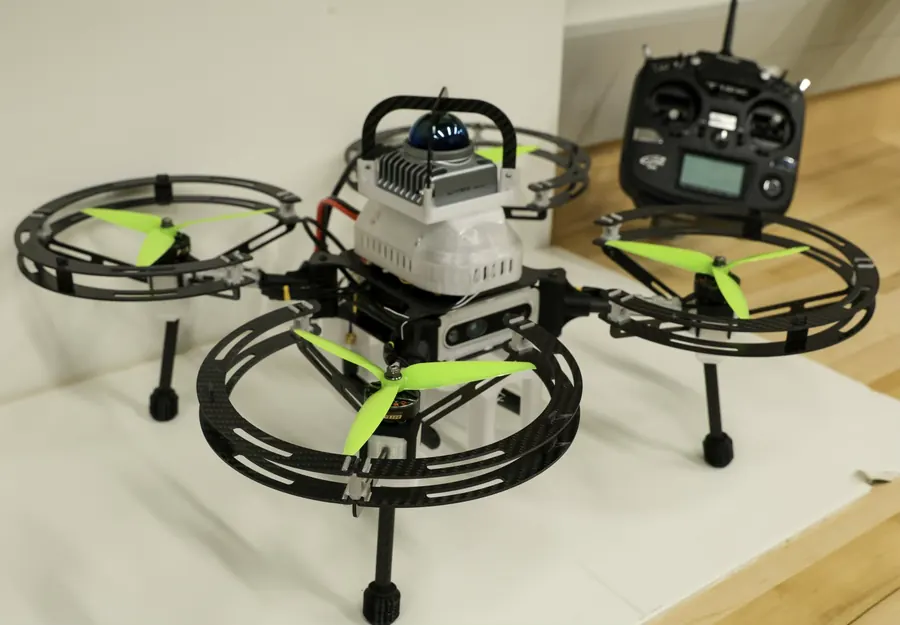
Quadrotor drone control is a popular domain for control research and reinforcement learning applications. Existing control applications for quadrotor drones can be leveraged to improve the performance of reinforcement learning agents. We propose methods for interfacing a reinforcement learning agent with a typical quadrotor drone flight controller. One method is to provide auxiliary rotor commands that adjust the output of a static PID controller. The other method is for an agent to identify continuous absolute controller parameters for the PID controller. These methods are used to train agents and evaluate their performance through simulation and compare against a typical reinforcement learning approach as well as a static PID controller. The results show that the trained agents are able to successfully mitigate wind disturbances and outperform both typical reinforcement learning agents and a typical PID controller.