
Project Overview
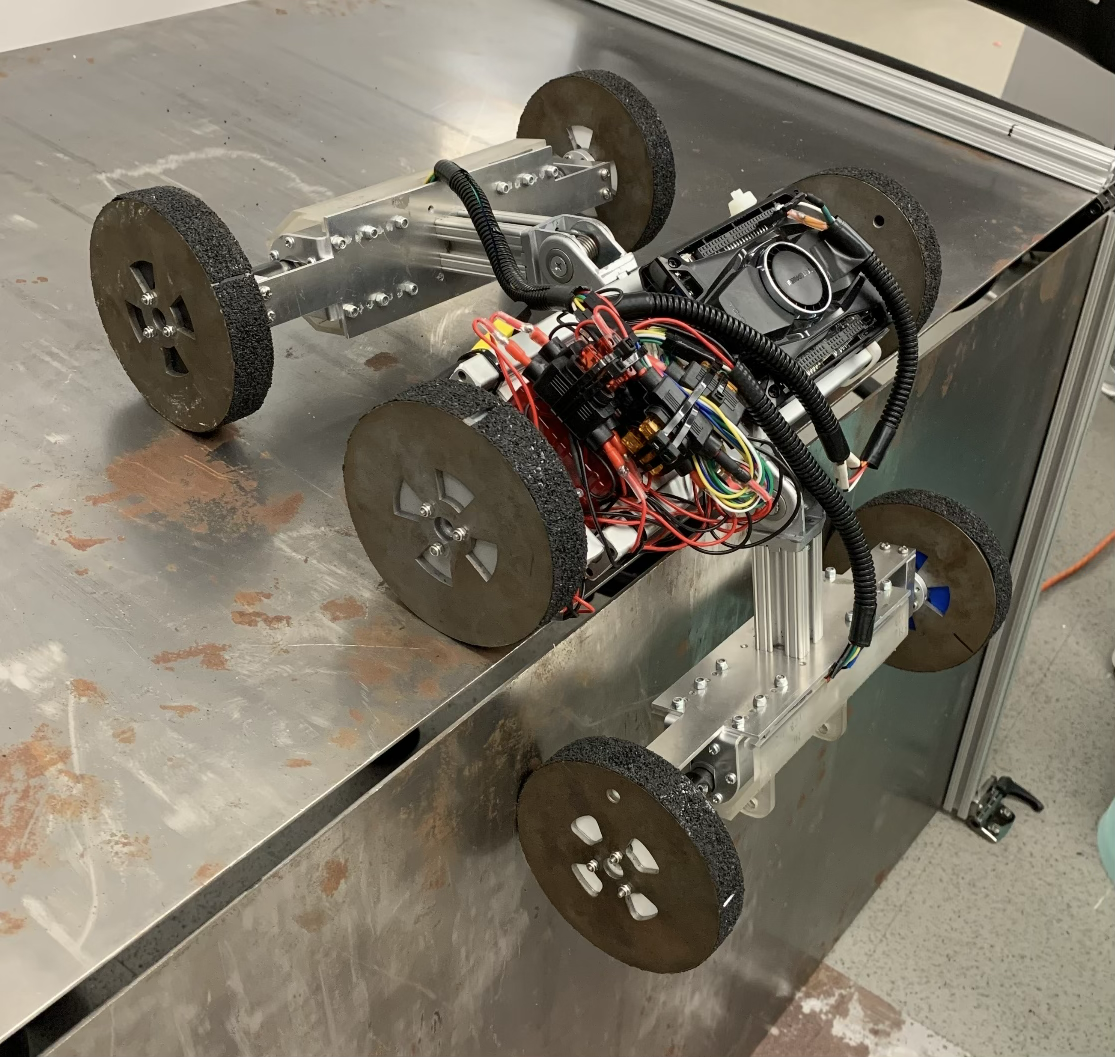
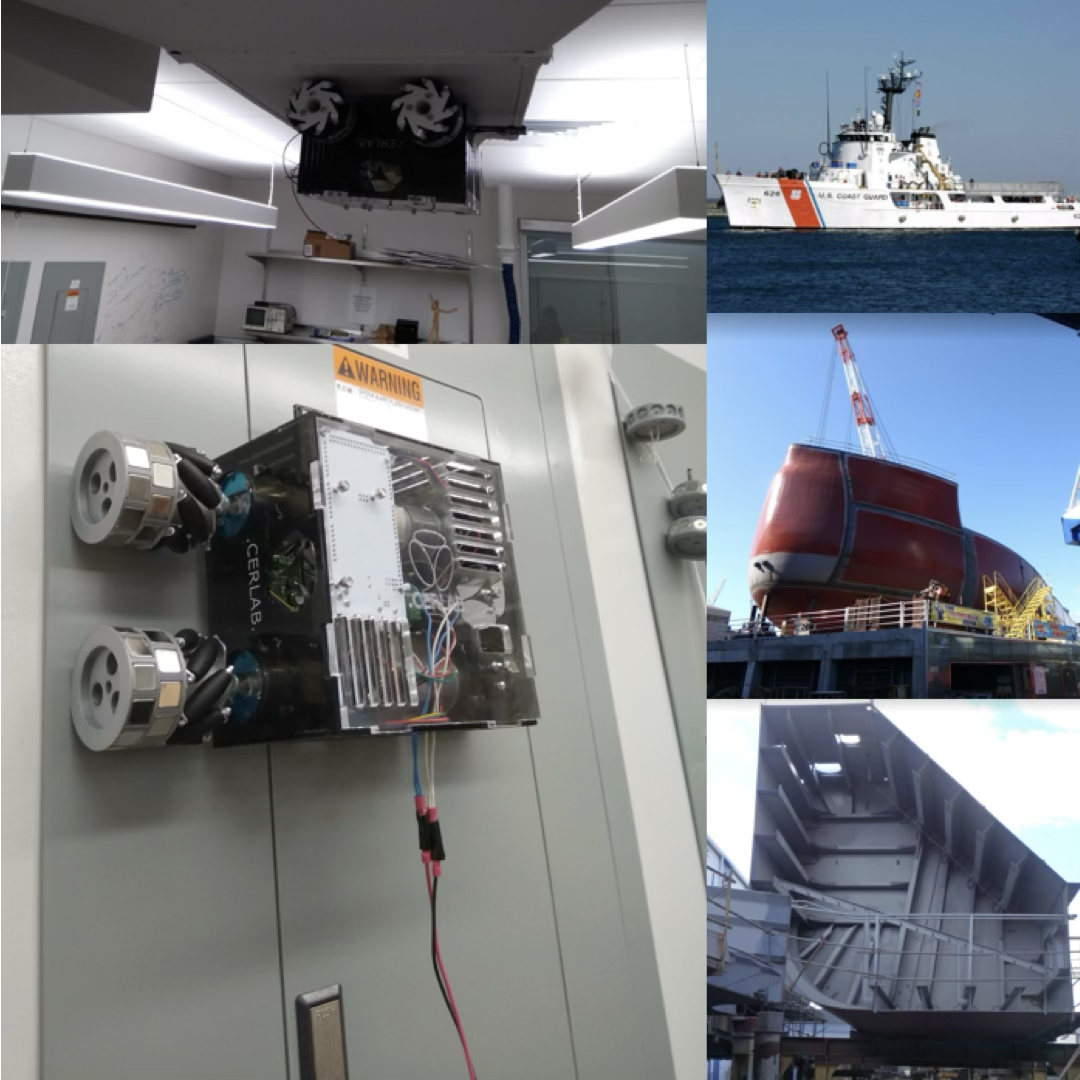
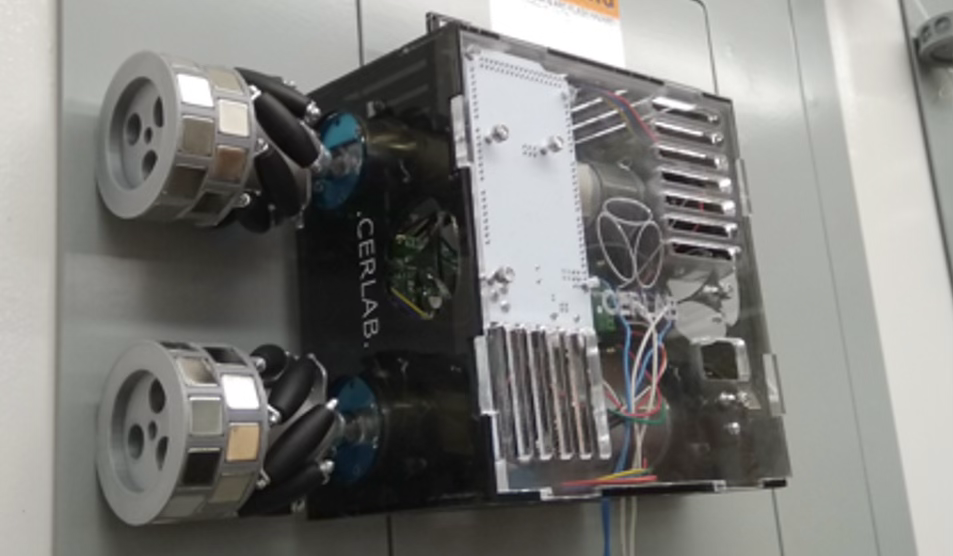
Critical infrastructure inspection in confined spaces presents significant safety and accessibility challenges, particularly in ship cargo holds, nuclear power plant interiors, and large steel structures where traditional lift access is prohibitively expensive or dangerous. Our WallCrawler autonomous robot addresses these limitations through advanced magnetic adhesion technology combined with multi-surface navigation capabilities, enabling comprehensive inspection of vertical walls, ceilings, and complex geometries in GPS-denied environments. The system integrates computer vision, SLAM navigation, and high-resolution imaging to traverse steel surfaces autonomously while capturing detailed visual data for defect analysis. Key innovations include adaptive magnetic coupling that maintains secure attachment across varying surface conditions, obstacle avoidance algorithms for complex structural environments, and real-time position logging against facility CAD models for precise documentation.
The technology transforms structural inspection workflows by providing safe, repeatable access to previously unreachable areas while delivering comprehensive digital documentation and defect analysis. Maritime industries benefit from faster ship sub-block inspections and cargo hold assessments, while nuclear facilities gain the ability to perform critical safety inspections in high-radiation areas without human exposure. The system reduces inspection costs by up to 60% compared to traditional scaffold-based methods while improving coverage consistency and documentation quality. Our research team, led by Professor Kenji Shimada, brings expertise in mobile robotics, magnetic attachment systems, and autonomous navigation, actively collaborating with shipping companies, nuclear operators, and steel industry partners to validate and deploy this technology across diverse critical infrastructure inspection applications.